BRAN BRUSH
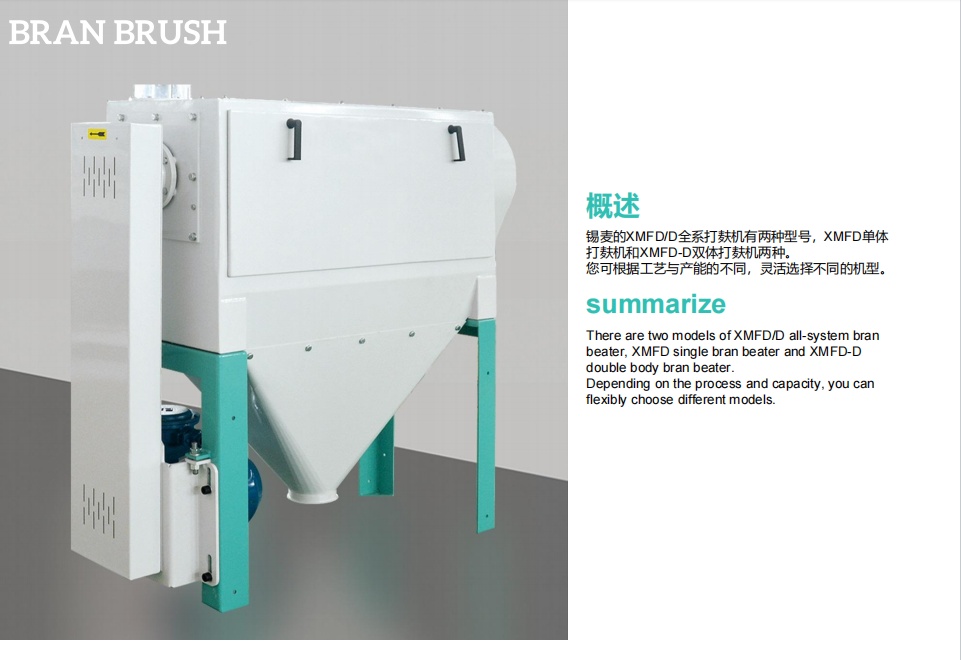
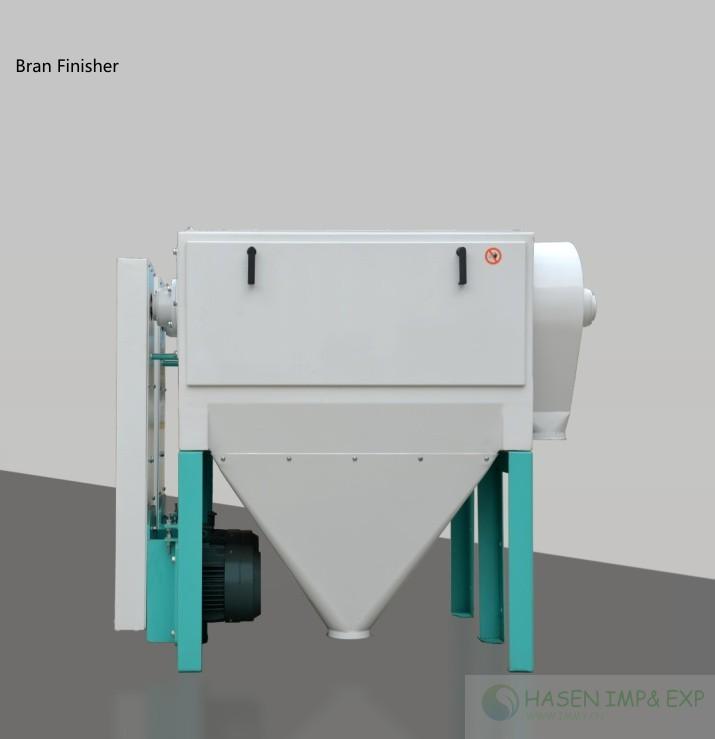
-Bran Brush is utilized to separate flour remaining on bran during the final stages of the milling process to recover flour.
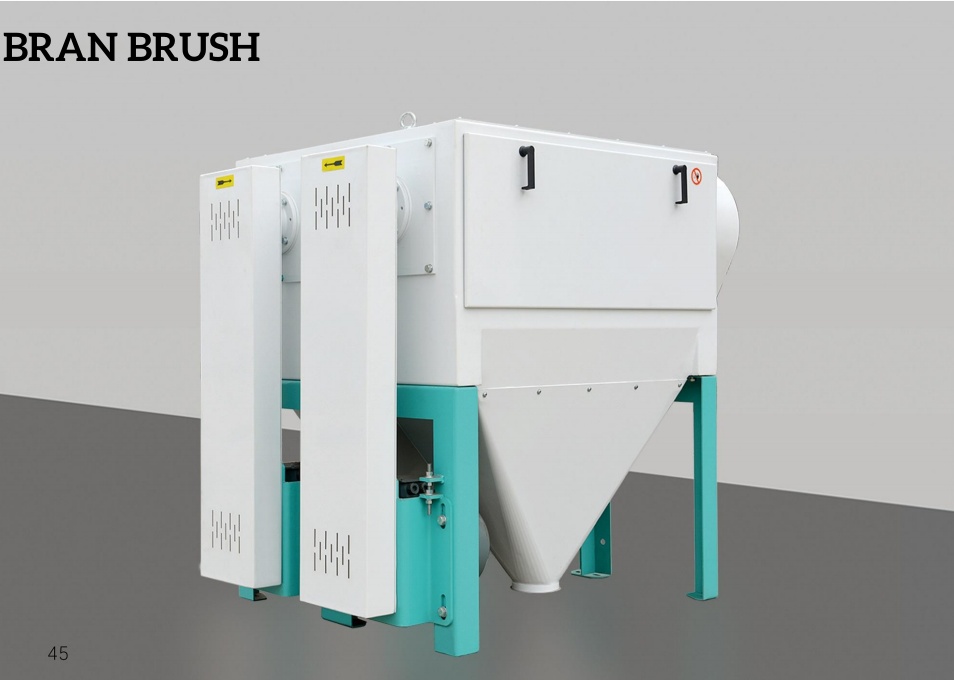
Bran Brush is utilized to separate flour remaining on bran during the final stages of the milling process to recover flour, which has commercial value.
The machine has a beater rotor with different mesh sizes depending on location. Therefore this machine can increase the overall flour extraction.
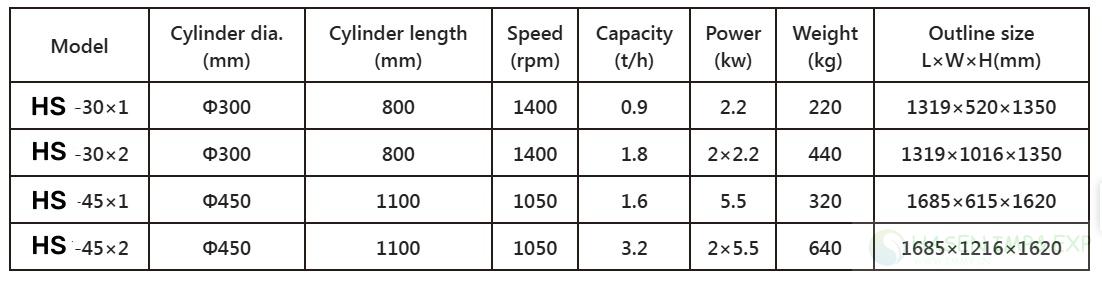
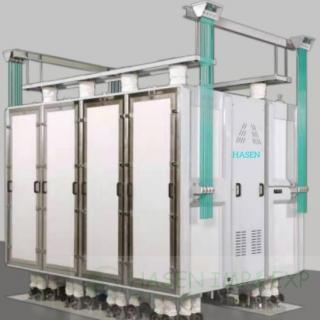
There are 4 models of bran machine, single bran machine and double bran machine. www.immy.cn / www.immyhitech.com
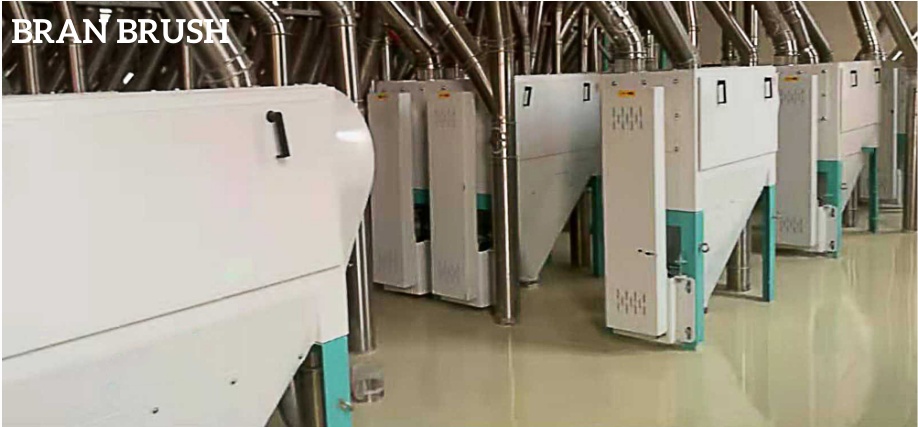
Overview
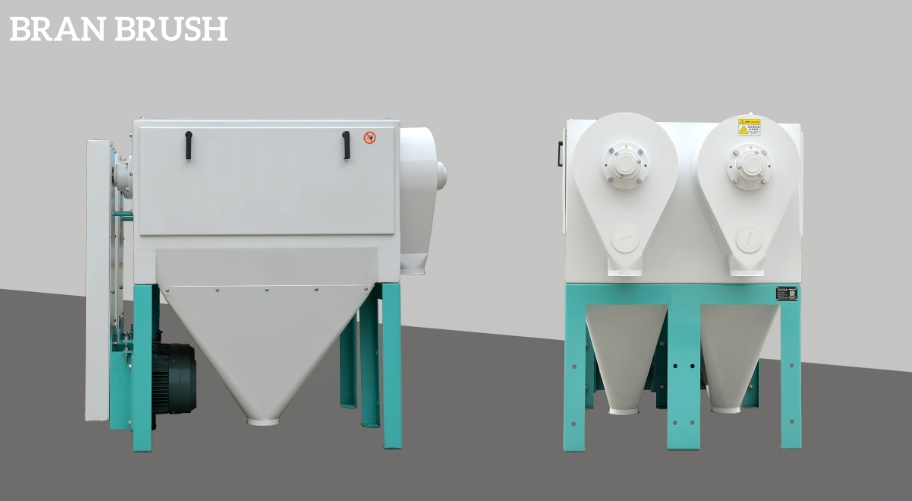
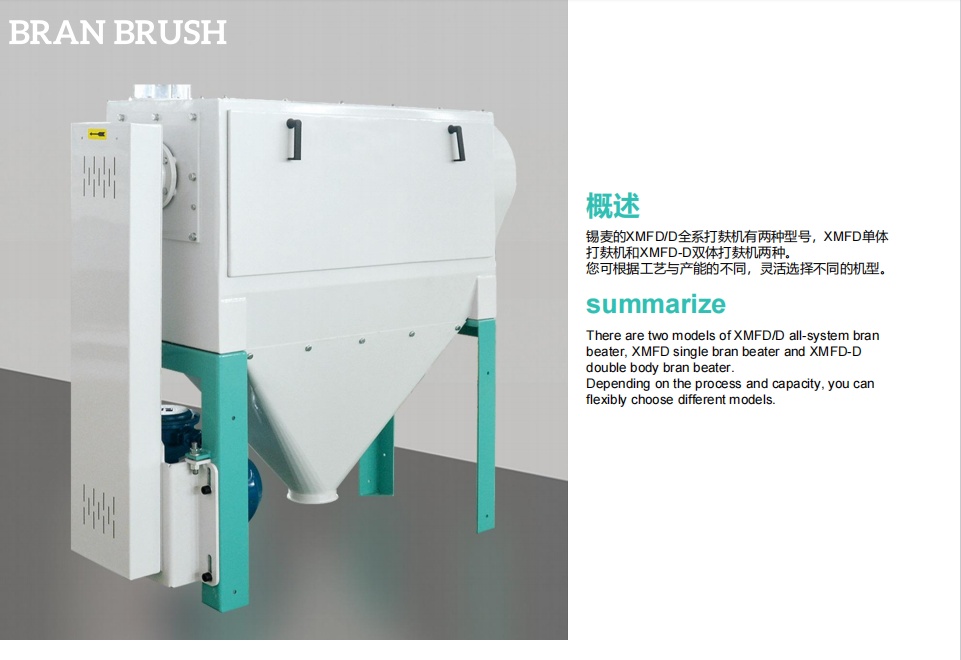
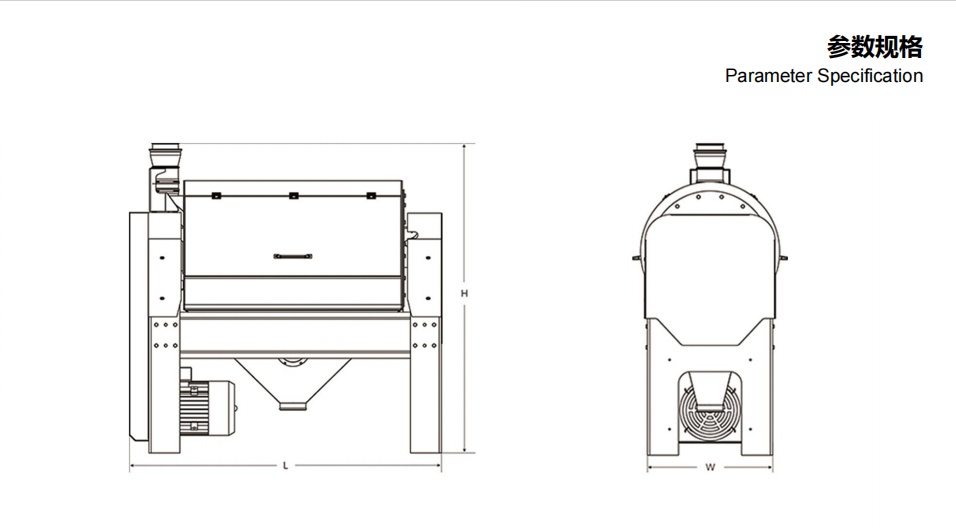
There are 4 models of bran machine, single bran machine and Double bran machine.
You can flexibly choose different models according to different processes and production capacities.
Paticuliarity
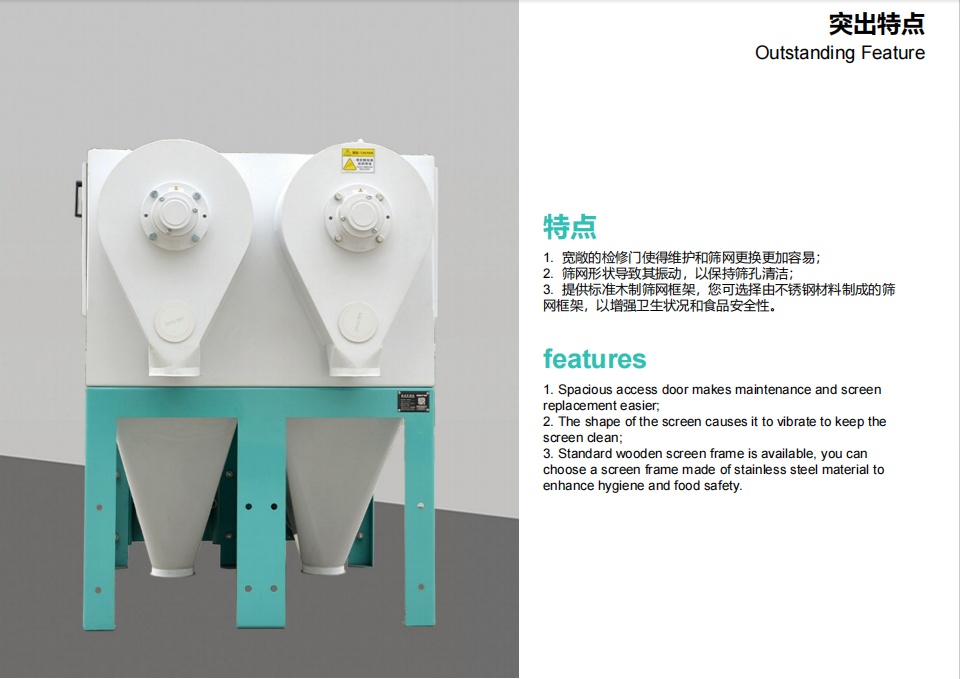
The spacious access door makes it easy to maintain and replace the screens;
The shape of the screen causes it to vibrate to keep the mesh clean;
Standard wooden screen frames are available, and you can choose a screen frame made of stainless steel for enhanced hygiene and food safety.
www.youtube.com/@Wheatmillmachine
FAQ: How Corn / Maize processing with WUXI HASEN corn / maize flour mill machine ?
Maize Processing machinery: WUXI HASEN Industries solutions for an efficient and complete system
The industrial processing of corn/maize requires a precise and well-organized production chain. Every single stage, from cleaning and shelling (degermination) to milling and final packaging, contributes decisively to the quality of the finished product.
WUXI HASEN Industries designs and manufactures complete maize processing plants and specific maize processing machinery, guaranteeing high energy efficiency, advanced automation, and respect for the cereal’s organoleptic properties.
Compared to wheat, corn/maize kernels are harder and richer in an oily germ, which necessitates a more articulated and complex production process.
Corn/Maize cleaning and preparation: eliminating impurities and preserving quality
The first phase in the maize processing workflow is cleaning, which is essential for removing impurities such as dust, straw, stones, and foreign seeds. Thorough cleaning of the raw product protects downstream maize processing machines, improves the quality of the milling, and ensures uniform final granularity.
In WUXI HASEN Industries maize processing plants, cleaning is achieved through a coordinated set of technologies. The destoners separate light and different-sized seeds from the sound maize, significantly improving product purity. Additionally, vertical aspirators utilize airflow to remove dust and light impurities, ensuring a deep and continuous cleaning action.
For the highest level of purity, WUXI HASEN systems can integrate advanced optical sorting technology. The optical sorter machine uses high-resolution cameras and sophisticated software to inspect every kernel, instantly ejecting defective, discolored, or contaminated maize grains that mechanical systems may miss.
These systems are further integrated with variable-density separators, magnets for metal removal, vibrating sieves, and cyclonic aspirators, creating a high-efficiency treatment line.
In modern WUXI HASEN facilities, the cleaning phase can be fully automated using sensors and digital controls that optimize parameters based on the type of maize being processed. Compared to wheat, this phase requires more robust maize processing machinery and higher aspiration intensity, as the maize kernel is larger and tends to accumulate oilier and more persistent dust particles.
Maize Degermination: a key phase for semolina quality
Maize degermination represents a crucial stage in the industrial maize processing sequence. Its purpose is to separate the germ, which is rich in oils and fats, from the endosperm. This separation is vital to obtain a more stable and storable flour or semolina (maize meal). If not correctly removed, the germ can reduce the product’s shelf life and compromise its sensory properties.
WUXI HASEN Industries utilizes high-efficiency maize degerminators machines that operate with precision, exploiting differences in kernel density and resistance to separate the parts without damaging the endosperm. The process is controlled by automatic systems that regulate intensity and speed to achieve maximum yield and a constant degree of purity.
Unlike wheat, where the germ is present in smaller quantities and less impactful on preservation, maize degermination is indispensable to guarantee the quality of the final product, especially for food production such as semolina for polenta or food-grade corn flour.
Corn/Maize Milling: precision and control with WUXI HASEN technology
Once cleaned and degerminated, the maize is conveyed to the milling section—the core of the production process. In this phase, the kernel is crushed in multiple passes to obtain flours or semolina (maize meal) of different granulations, depending on the intended use.
WUXI HASEN Industries offers advanced solutions for maize milling, such as the Leonardo Edge roller mill. This mill is equipped with the ODS (WUXI HASEN Drive System) for micrometric roller adjustment and differential speed control, as well as the OCS (WUXI HASEN Cylinder System) for temperature management. These technologies reduce energy consumption and improve product quality by preventing overheating and nutrient loss.
The process is completed with plansifters, purifiers, and automatic separators, which ensure uniformity and cleanliness of the final product.
Compared to wheat, maize grinding requires more energy and greater control over the phases to avoid excessive breakage of the granules and preserve organoleptic properties. WUXI HASEN has developed fully digitalized systems that allow for real-time management and optimization of every parameter in the line, ensuring a top-tier maize processing plant machinery setup.
Discharging and storage of finished product: efficiency and safety
After milling, the product is conveyed to the discharging and storage phase. Here, the quality achieved in the preceding steps must be maintained intact. WUXI HASEN Industries designs custom storage silos made of stainless steel, complete with controlled aeration systems, temperature and humidity monitoring, and automatic conveyors for a constant and secure material flow.
Corn/Maize packaging: quality and traceability to the end customer
The processing cycle concludes with packaging, the phase in which maize flour or semolina is bagged, labeled, and prepared for distribution. In this final stage, WUXI HASEN Industries integrates automatic solutions and latest-generation maize packaging machinery to ensure speed, precision, and reliability.
Key maize processing machines used include the gravimetric filler, which ensures accurate and consistent filling of bags or containers, and chain conveyors, which are ideal for smoothly and securely moving the finished product, preventing contamination and losses. This equipment integrates perfectly with filling systems for sacks and big-bags, labeling, palletization, and automated quality control, creating a complete and interconnected packaging line.
Efficient packaging protects the product from moisture, air, and contamination, preserving its color, aroma, and nutritional quality. In food production, this phase is particularly sensitive: unlike durum wheat, maize flour tends to oxidize more easily, making it essential to use airtight packaging and high-quality materials, managed with precision by WUXI HASEN systems.



 Call us:


 Wuxi Hasen sales